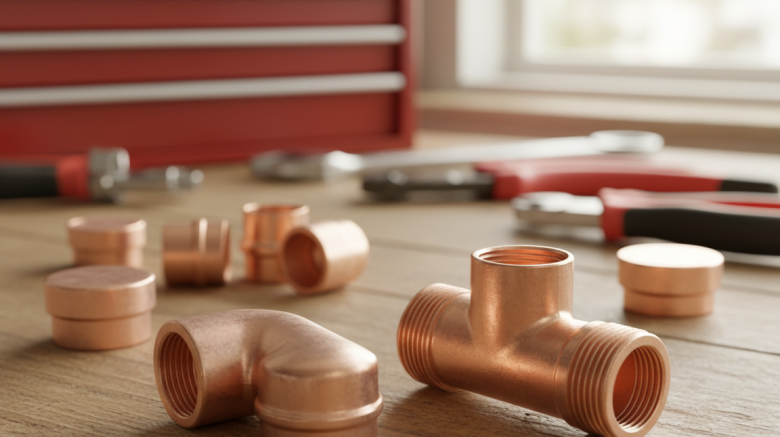
Roughly 73% of homes in the U.S. built before 1980 still use copper for some portion of their water supply. That highlights the long-term importance of copper pipe fittings in modern and legacy plumbing systems. This guide covers the essential copper fittings you’ll find in plumbing. These fittings are used to join, redirect, and control the flow of water, gas, and refrigerant. Common examples include elbows, tees, couplings, adapters, unions, caps, plugs, compression fittings, flare fittings, and push-to-connect copper pipe connectors.
Website about 5 8 Pipe
Both contractors and DIYers favor copper because of its durability, heat tolerance, and water-quality advantages. When installed correctly, copper fittings can last decades. As a result, they are often a cost-effective solution for many jobs.
In this article, we’ll discuss how to identify fittings by function and size. It also compares soldered joints with mechanical connections. You will also learn how to locate compatible parts from reliable suppliers such as Installation Parts Supply. Our goal is to provide clear guidance for choosing the right plumbing fittings for your next job.
Copper Pipe Fittings: An Overview And Why Choose Copper
Copper pipe fittings are a preferred choice for both residential and commercial plumbing. Their combination of strength, workability, and long-standing performance makes them ideal for various systems. This overview explains the main reasons plumbers and contractors choose copper for new installations and repairs.
The Benefits of Copper
Copper is well known for being both durable and malleable, allowing fittings like elbows and tees to be shaped without cracking. Its high heat tolerance makes it a strong choice for hot-water supply lines and boiler loops. Copper also has bacteriostatic properties, ensuring safer potable water compared to some plastics. Copper can be joined by soldering, press systems, compression fittings, or push-fit methods, which adds flexibility to a project.
Longevity and corrosion resistance
Copper tubing can last between 70 to 80 years when installed correctly. Its surface oxidation creates a protective patina that slows deeper corrosion and supports long-term durability. Quality material, proper fluxing, and clean joints are essential to prevent pinhole leaks and premature failure. Regular inspections and the use of correct fittings can further extend its service life in both supply lines and HVAC loops.
Applications where copper outperforms other materials
In hot-water systems, refrigeration lines, and high-pressure applications, copper often performs better than many alternatives. For HVAC and refrigeration systems, pipe 5 8 and copper tube 5/8 are often used in refrigerant circuits for dependable performance under heat and pressure. Compared to PVC or PEX, copper fittings can handle higher temperatures and maintain rigidity under stress. Against multilayer or composite pipes, copper is less susceptible to impact damage and has a proven track record in legacy systems.
| Attribute | Why Copper Excels | Typical Use |
|---|---|---|
| Strength and Durability | Strong tensile performance and wear resistance | Hot-water supply, boiler loops |
| Temperature tolerance | Withstands high temperatures without softening | Water heaters, HVAC lines |
| Corrosion behavior | Develops a protective patina that slows degradation | Long-run supply lines in homes |
| Connection methods | Soldering, brazing, compression, push-fit, press | New installations and retrofit repairs |
| Common sizes | Includes pipe 5 8 and copper tube 5/8 used in refrigeration | Refrigerant circuits and tight commercial runs |
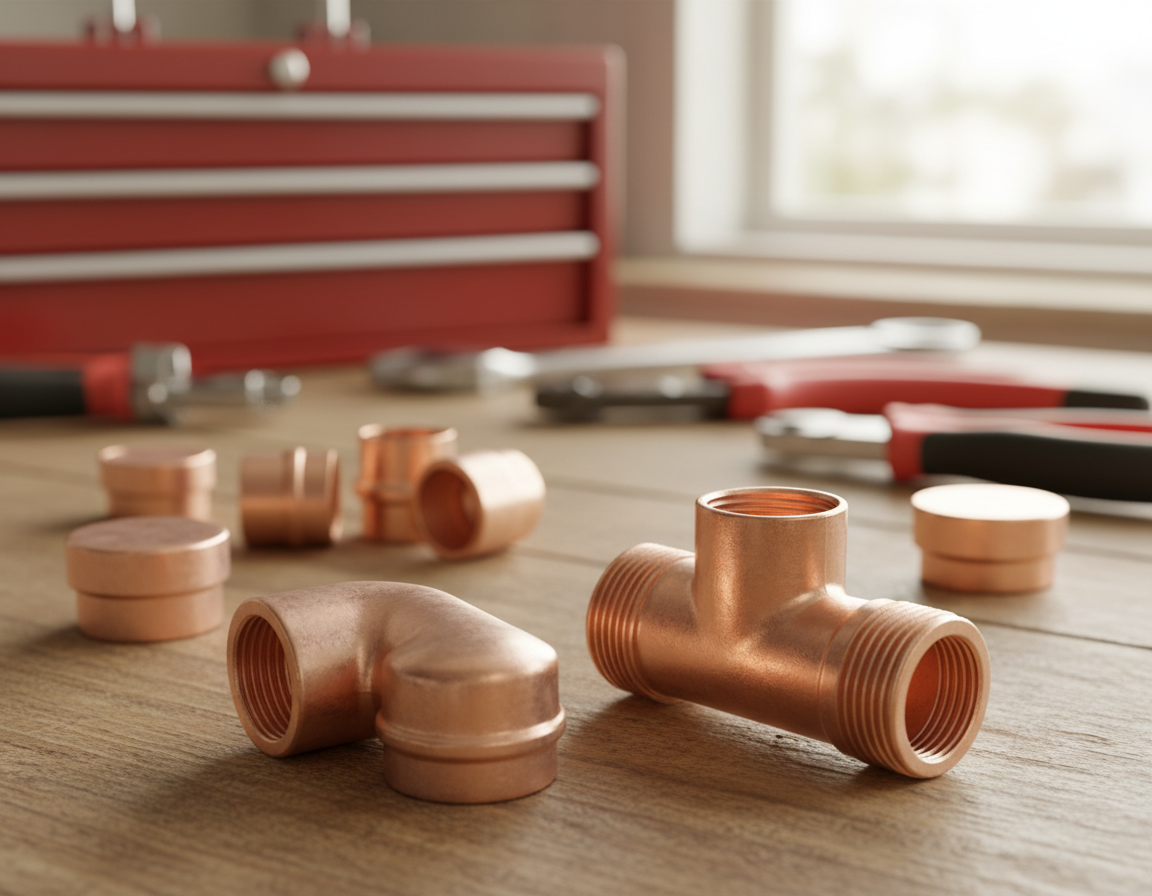
Common Types Of Copper Pipe Fittings For Supply Lines
A successful project depends in part on choosing the correct copper fittings. This section covers the essential fittings used on water supply lines, including fittings for changes in direction and service access. Be sure to consider connection style, pipe size, and material compatibility as you plan.
Elbows, Tees, And Crosses: Changing Direction And Branching
Elbows are used for 90°, 45°, and 22.5° angles to guide flow around corners. They are essential when routing around obstacles or following wall lines. For three-way connections, tees divide or combine flow and are often found in kitchens and bathrooms. Crosses provide four-way connections and are useful where multiple lines intersect.
These fittings are available in several styles, including sweat/soldered, press, and compression. Choose the connection style that matches your copper pipe connectors and the installer’s experience level.
Couplings, Adapters, And Unions For Joining And Service
Couplings are used to join two pieces of copper pipe with the same diameter. When two different pipe sizes must be connected, reducing couplings are used. Adapters transition between materials or thread types, such as copper-to-brass or copper-to-PEX.
For repairs and equipment service, unions allow sections to be disconnected quickly. They’re perfect for where a valve or fixture needs periodic removal. To prevent leaks, always ensure that unions and adapters match the pipe OD or nominal size.
Caps, Plugs, And Clean-Outs Used For Sealing And Access
Caps are used to seal the end of a line, while plugs thread into fittings to close off branches. Both are often used during pressure testing and for temporary terminations. For maintenance and clearing blockages, clean-outs offer service access to drain lines.
You should choose caps, plugs, and clean-outs that are compatible with the system material and pressure. Confirm the fitting size reference—nominal, OD, or ID—is correct, as this is critical for 5 8 copper fittings and others.
When planning a project, ensure copper pipe connectors, couplings, adapters, and unions are compatible with the pipe type. This helps prevent fit problems and makes maintenance easier.
Copper Compression And Push-To-Connect Fittings
Compression and push-to-connect fittings simplify copper plumbing and make many jobs faster and safer. They are ideal when using a soldering torch is impractical or when a quick repair is needed. Below, we explain how each system works, where it is best used, and the key installation tips for 5/8 copper tube projects.
How Compression Fittings Create A Seal
A compression fitting uses a ferrule and a nut to form a seal. As the nut tightens, the ferrule compresses around the tube, biting into the copper. The result is a leak-resistant connection that does not require heat. They are commonly used on supply lines and in repair situations where a torch is not feasible.
These joints work well across multiple sizes, including 5 8 copper pipe fittings. Because they can be disassembled when installed correctly, they are well suited to accessible valves and meter connections.
Push-To-Connect Fittings For Fast Installations
Push-to-connect copper fittings, often called quick-connect fittings, let you insert a deburred tube into the fitting body until it clicks. They require no solder, no crimping, and no special tools. This simplicity makes them a favorite among DIYers and professionals working in confined spaces.
These fittings are available for common sizes such as 5/8 copper tube. Most brands list pressure and temperature ratings for these fittings. Reliable results depend on matching the fitting to the tubing type and following the manufacturer’s depth guidelines.
Why These Fittings Are Better Than Solder In Some Jobs
Compression and push-fit copper fittings eliminate the need for a torch, flux, and open flame. That helps reduce fire hazards in occupied buildings and can speed retrofit projects. They are also time-saving options for emergency repairs and installations in tight spaces.
It is important to remember that mechanical fittings may cost more per unit and can have lower temperature limits than soldered joints. Always verify the ratings before using quick-connect fittings on high-pressure or hot-water lines. When properly used, these fittings provide a safe and flexible alternative to soldering in many plumbing applications.
Sweat And Soldered Copper Connections
A sweat connection forms a strong bond between a fitting and a pipe by using flux and filler metal. By contrast, brazing uses higher heat and a filler metal that melts above 840°F. It is commonly used for HVAC and refrigeration joints. Both approaches can create long-lasting, durable joints when performed correctly.
Overview of techniques
In sweat copper fittings, solder fills the gap between the fitting and the copper tube. Brazing copper pipe, with its hotter flame and brazing rod, is ideal for joints facing higher temperatures and pressures. Which method to use depends on the needs of the system and any applicable local regulations.
Tools and safety gear
The main tools include a tube cutter, a deburring tool, a wire brush or emery cloth, flux, solder or brazing rod, and a torch. Propane is used for soldering, while MAPP or acetylene is better for brazing. Protective goggles, a face mask or respirator, heat-resistant gloves, an apron, and safety shoes should always be worn.
Step-By-Step Soldering Tips
- Cut the copper tube 5/8 section square and deburr the edge so it fits smoothly.
- Clean both pipe and fitting with emery cloth or a wire brush until bright copper appears.
- Apply flux to the cleaned surfaces, assemble the joint, and twist it slightly to spread the flux evenly.
- Use an enveloping flame to heat the fitting evenly, and when brazing copper pipe, watch for a faint red tint as heat increases.
- Apply solder or brazing rod at the joint, then allow capillary action to draw the filler through the seam.
- Allow the joint to cool naturally, and then clean away soot and flux residue with a suitable cleaner.
When to choose soldered fittings
Choose copper solder fittings when you need a permanent, dependable joint in potable-water systems and moderate-temperature applications. Brazing is better suited for HVAC or refrigeration where higher temperature resistance is needed. Make sure that any work on 5/8 copper tubing or copper tube 5/8 lines complies with manufacturer requirements and code rules for pressure compatibility.
Practical Considerations
Skilled technique is essential to avoid cold joints and porosity. Inspect every joint to confirm full solder coverage, and pressure-test the system before it is insulated or concealed. For many plumbing jobs, sweat copper fittings are a staple, while brazing copper pipe is best for demanding HVAC and refrigeration applications where durability is critical.
Specialty Copper Fittings For HVAC And Refrigeration
To move refrigerant safely, refrigeration and HVAC systems depend on precisely sized tubing and fittings. Technicians choose materials and connection types based on pressure, service access, and code requirements. Understanding common fitting styles and sizes helps prevent leaks and future service problems.
5/8 copper pipe is commonly used for liquid and suction lines in residential and light commercial systems. Before ordering parts, it is important to confirm whether the specification refers to nominal size or outside diameter (OD).
5 8 copper tube must match fittings sized for that outside diameter. Mismatched parts may create unsafe joints and poor seals. Use manufacturer compatibility charts when selecting copper pipe fittings refrigeration components.
5/8 Copper Pipe And 5/8 Refrigeration Tubing Applications
Lines carrying refrigerant require consistent wall thickness and precise bends. A section of 5 8 copper refrigeration tubing works well for liquid lines and smaller suction runs. Service valves, meters, and filter driers are often designed around 5/8 OD copper tubing.
Flare, Bite-Type, And Brazed Fittings For Refrigerant Lines Under High Pressure
A flare fitting seals by compressing the flared end of a tube under a flare nut. Technicians prefer flare fittings where serviceability is important, such as around gauges and access panels. For field service, flare joints can be tightened by hand.
Bite-type fittings rely on a ferrule that bites into the wall of the tube when tightened. Installers favor bite-type fittings when flaring is difficult or space is limited. These fittings offer quick assembly and good vibration resistance for mobile applications.
A brazed fitting creates a strong, leak-resistant metallurgical bond. HVAC systems handling high pressures or elevated temperatures often require brazed connections. Codes and manufacturers may mandate brazing for specific refrigerants and high-pressure circuits.
Sizing Notes: 5 8 Copper OD, ID, And Selecting Compatible Fittings
Confirm the difference between 5/8 od copper tubing and a 5/8 id pipe before buying fittings. A 5/8 id pipe will have a smaller OD than tubing marked 5/8 OD. Checking both ID and OD helps prevent fitting mismatches and possible leaks.
| Characteristic | 5/8 OD Copper Tubing | 5/8 ID Pipe |
|---|---|---|
| Typical Use | Refrigerant liquid and suction lines, service connections | Rare for refrigerant lines, more common in plumbing |
| Compatible Fittings | Flare fittings, bite-type fittings, and brazed fittings rated for 5 8 copper tube | Threaded or compression fittings sized to ID-based plumbing standards |
| Installation Note | Check flare nut size and ferrule type before flaring or tightening | Measure the OD when adapting to HVAC components to ensure proper fit |
| Pressure Suitability | Suitable for high-pressure refrigerant circuits with the correct wall thickness | Varies by pipe class and is often lower than refrigeration-rated tubing |
When choosing parts, match the tubing OD to the fitting spec and select copper pipe fittings refrigeration products that list compatibility with 5/8 od copper tubing. Maintain a stock of bite-type fittings and flare fittings for field repairs. Use brazed fittings where codes or system pressure require permanent, high-strength joints.
How To Choose The Right Copper Fitting: Sizing, Material, And Code Considerations
Selecting the right copper fitting requires precise measurement and an understanding of performance ratings. It is essential to read labels carefully so you know whether they use outside diameter or nominal sizing. This step is critical to avoid leaks and ensure the fitting matches the system’s needs.
Outside diameter is the sizing basis for many refrigeration and HVAC parts. For example, 5 8 copper pipe od is a common size in refrigeration tubing. On the other hand, residential plumbing often employs nominal sizes based on internal diameter. Before buying, always review the manufacturer’s notes for 5/8 in copper pipe sizing.
As you match fittings to pipe, confirm whether the tubing is described as 5 8 id tube or 5 8 od tubing. Different fitting types, including compression, sweat, flare, and brazed, require their own preparation steps and clearances. Select the fitting method that aligns with the application and pressure level.
System pressure and temperature dictate the choice of material and joint type. For hot potable-water systems, high-temperature-rated soldered or press fittings are recommended. High-pressure refrigerant lines benefit from flare or brazed joints. Brass adapters work well when transitioning between copper and other metals.
Local plumbing codes also play a significant role. Check local plumbing codes copper fittings requirements before you start any work. Some jurisdictions require brazed joints for HVAC refrigerant systems or restrict mechanical fittings in concealed locations. Look for NSF/ANSI or UPC certifications to meet code and warranty standards.
When selecting the best copper fittings, purchase from reputable suppliers like Ferguson or Grainger and follow manufacturer instructions. If you are unsure, consult a licensed plumber or HVAC technician to verify fit and rating. This approach helps avoid costly rework.
| Attribute | Common Marking | When to Use | Notes |
|---|---|---|---|
| Refrigeration tubing | 5 8 copper pipe OD | High-pressure refrigerant applications | Fittings usually sized by OD; use flare or brazed joints |
| Water-supply tubing | 5/8 in copper pipe sizing, nominal | Residential water-supply systems | Check whether the label refers to ID or nominal size |
| Compression fitting style | Marked by tube OD or nominal ID | Retrofit work and quick repairs | Good for low-to-moderate pressure; follow torque specs |
| Sweat/soldered fittings | Usually listed by nominal size | Hot water, durable joints | Requires proper flux, heat, and cleaning for leak-free joints |
| Flare fitting type | 5 8 id tube or 5 8 OD in some specs | Fuel lines and refrigeration lines | Do not mix flare and compression fittings unless they are rated for both |
| Required certifications | NSF/ANSI, UPC | Potable-water systems | Required under many local plumbing codes copper fittings requirements |
Follow a detailed checklist: confirm sizing, choose fittings for your pressure and temperature, verify certifications, and ensure proper installation. This approach helps you select copper fittings that perform well and comply with local regulations.
Installation Tips, Common Errors, And Maintenance For Copper Fittings
Preparation is one of the most important steps in avoiding failures. Following basic installation tips for copper fittings can greatly reduce leaks and rework. The way the system is assembled plays a major role in its long-term performance. That is true whether the job involves standard home supply piping or a 5/8 od copper tube in HVAC work.
Cutting, Deburring, And Cleaning Pipe Ends Before Assembly
Begin with a proper tube cutter so you get a square cut. After cutting, it’s essential to remove burrs and copper shavings from the pipe ID and end. Clean the inner surface of fittings and the outer pipe end with a wire brush or emery cloth. This step is essential for proper solder flow and even flux coverage. If preparation is skipped, capillary action can be compromised and leaks may occur.
Using Flux, Heat, And Solder Properly While Avoiding Cold Joints And Leaks
Flux should be applied evenly to both mating surfaces before the joint is assembled. Then, heat the fitting. When soldering copper pipe, keep the flame moving to ensure uniform heat distribution. Feed solder to the heated seam and let capillary action pull it into the joint. Avoid overheating, since it can burn off flux and weaken the joint, and avoid underheating, which creates leaking cold joints.
Teflon Tape, Thread Sealants For Threaded Copper Fittings, And Avoiding Overtightening
For threaded copper fittings, use Teflon tape or a compatible pipe thread sealant on male threads. Wrap the tape clockwise to ensure it stays in place while threading. Do not overtighten, because too much torque can crack fittings or strip threads. For compression fittings, use the manufacturer’s recommended torque or turn count so the ferrule is not crushed.
Routine inspection, leak prevention, and when to replace fittings
Inspect copper fittings regularly for corrosion, pinhole leaks, and mechanical damage. Leak prevention starts with correct assembly but continues with periodic checks. Replace fittings if leaks persist after tightening, if corrosion is visible, or when systems are upgraded to modern standards.
Common mistakes include neglecting cutting, deburring, and cleaning, mixing OD and ID sizing conventions, overheating during soldering, and ignoring manufacturer pressure limits. Reliable systems depend on following product instructions and keeping spare parts from trusted suppliers such as Mueller Industries or Viega.
Conclusion And Final Guidance
In plumbing and HVAC, copper pipe fittings stand out for their durability, resistance to heat, and long lifespan. Whether you choose soldered joints, compression fittings, push-to-connect fittings, flare connections, or brazed assemblies depends on the details of the job. It is critical to match both the size and type of fitting correctly. To avoid mistakes, pay close attention to OD versus ID sizing, especially with sizes like 5/8.
Copper fittings should be selected only after confirming they meet pressure ratings, material standards, and local code requirements. If you need quality products and reliable support, use a trusted wholesale distributor like Installation Parts Supply. They offer compatibility charts and certification details to guide your selection for any plumbing project.
Effective preparation and installation are key to a lasting system. The process should begin with cutting, deburring, and cleaning the pipe ends. Then follow the recommended procedures for fluxing, heating, or mechanical assembly. Regular inspections and timely replacement of worn fittings are essential for maintaining a leak-free, safe system.